
3 min read
How to Prepare Your House for a Cleaner
You do not need to clean before the cleaner comes. You do need to do about ten minutes of a specific kind of tidying, and they are not the same thing.
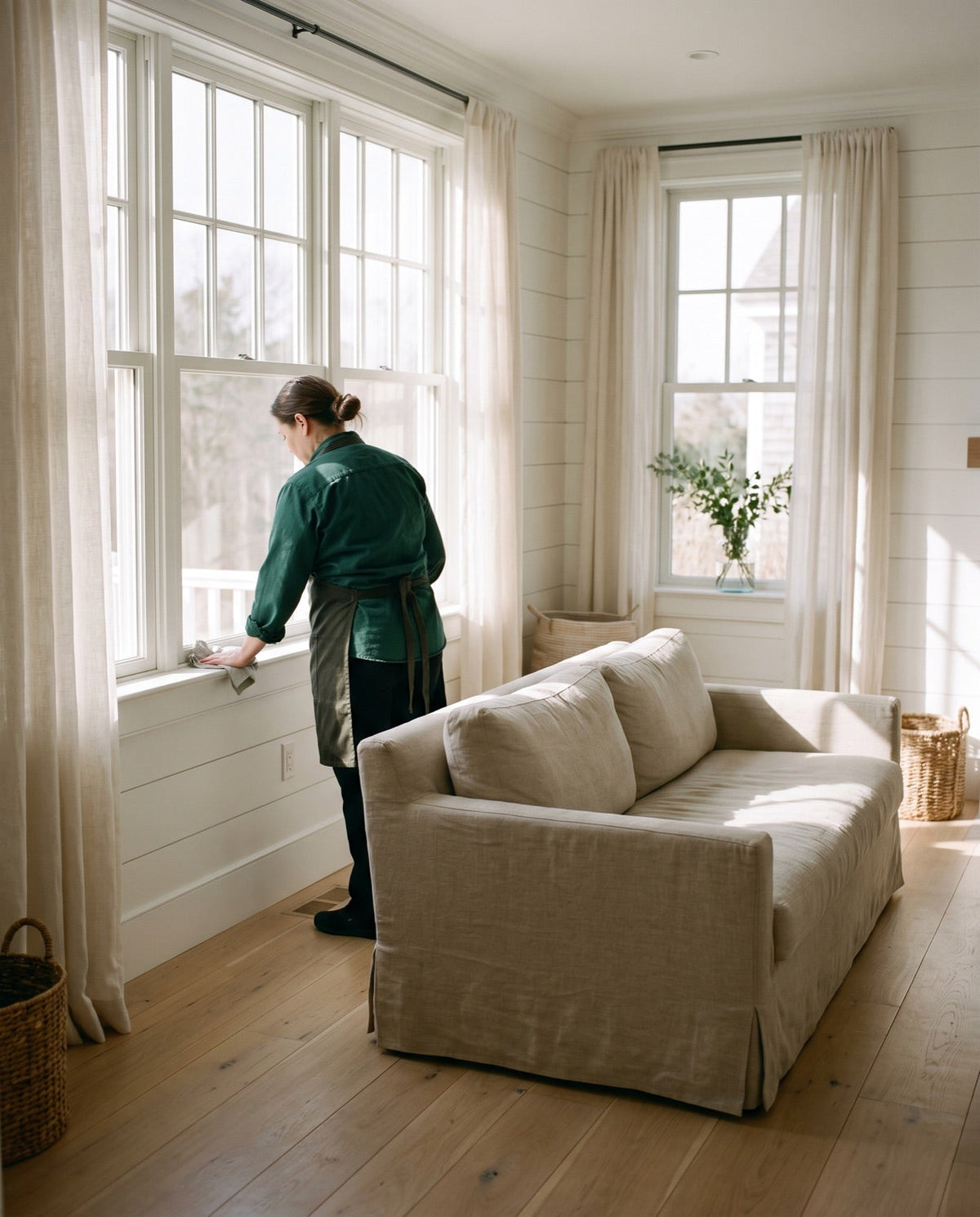
You do not need to clean before the cleaner comes. You do need about ten minutes of a specific kind of tidying, and it is not the same thing.
The distinction: cleaning is removing dirt, which is what you are paying for. Tidying is putting objects away, which nobody can do for you because we do not know where things go. Every minute a cleaner spends deciding where your mail should live is a minute not spent on a bathroom.
The ten minutes that are worth it
- Clear flat surfaces. Counters, the dining table, nightstands, the top of the dresser. A wiped surface with everything moved back is a real clean. A wiped surface with objects lifted and set down is not.
- Floors clear of things. Toys, shoes, laundry, the dog's bed. Anything that has to be moved before vacuuming.
- Sink empty. Dishes in the dishwasher or stacked to one side. Nobody can clean a sink around dishes.
- Put away anything valuable or private. Not because you should not trust the people in your house, but because it removes the question entirely and it costs you thirty seconds.
What is not worth doing
- Do not pre-clean. Wiping the counters before we arrive is paying us to wipe clean counters.
- Do not strip the beds unless you asked for a linen change. Say so and we will.
- Do not move furniture. On a deep clean we do that, and on a recurring visit we clean around it on purpose.
- Do not apologize. Genuinely. Everybody does it and nobody needs to.
Before the first visit specifically
Walk the list
You approve a room by room list before anyone cleans, and this is the moment to change it. Strike anything off. Move something up the priority order. If you never use the guest bathroom, take it off and put that time in the kitchen.
Say the specific things
The details that make a visit go right are almost never on a standard checklist.
- The door that sticks, and the trick to it.
- The floor that cannot take water.
- Which surfaces are unsealed stone or waxed wood.
- The room nobody goes in and does not need doing.
- Allergies, or a scent you cannot be around.
- The plant that dies if it gets moved.
These go on your property notes so they carry from visit to visit, whoever is on the job that day.
Decide about access
Most people are not home. A key, a lockbox, or a code all work. What matters is agreeing what happens if a code changes, and telling us before it does rather than after we are standing on the porch.
Pets
Tell us the dog's name and whether the dog is friendly with strangers. Nervous animals are usually happier shut in one room with a note on the door, and we will work around that room and do it at the end.
Cats and open doors are the other one worth flagging. If a cat cannot be near an open exterior door, say so, because doors get propped when supplies come in and out.
What happens on the day
You get a text with first names before anyone arrives, and another when we lock up. Nobody photographs the inside of your house. If something is not right, tell us and we will put it right on your next visit.
Being home, or not
Either is fine. Most people are out. If you work from home, tell us which room you will be in and we will do it first or last, whichever you prefer, and the vacuums are quiet enough to work through.
If you have not booked yet, the price tool gives you a real number in about thirty seconds, and what happens on a visit is spelled out on the why us page.
Where we clean
- House cleaning in Newburyport
- House cleaning in Amesbury
- House cleaning in Salisbury
- House cleaning in Newbury
- House cleaning in West Newbury
- House cleaning in Rowley
- House cleaning in Georgetown
- House cleaning in Ipswich
- House cleaning in Haverhill
- House cleaning in Seabrook
- House cleaning in Hampton
- House cleaning in Exeter
Keep reading

Move In Cleaning: What to Do Before the Furniture Arrives
There is a window between closing and the moving truck where the house is empty and every surface is reachable at onc...
Plant-Based Cleaning Products: What They Do and What They Do Not
Green cleaning marketing is close to meaningless, and some of it is not legal. Here is what the words actually mean, ...

Closing Up a Seasonal Home on the North Shore
A house that sits empty through a New England winter fails in predictable ways. Most of them are prevented in the two...
